3 Secrets for Wajima-Nuri Lacquerware's Longevity
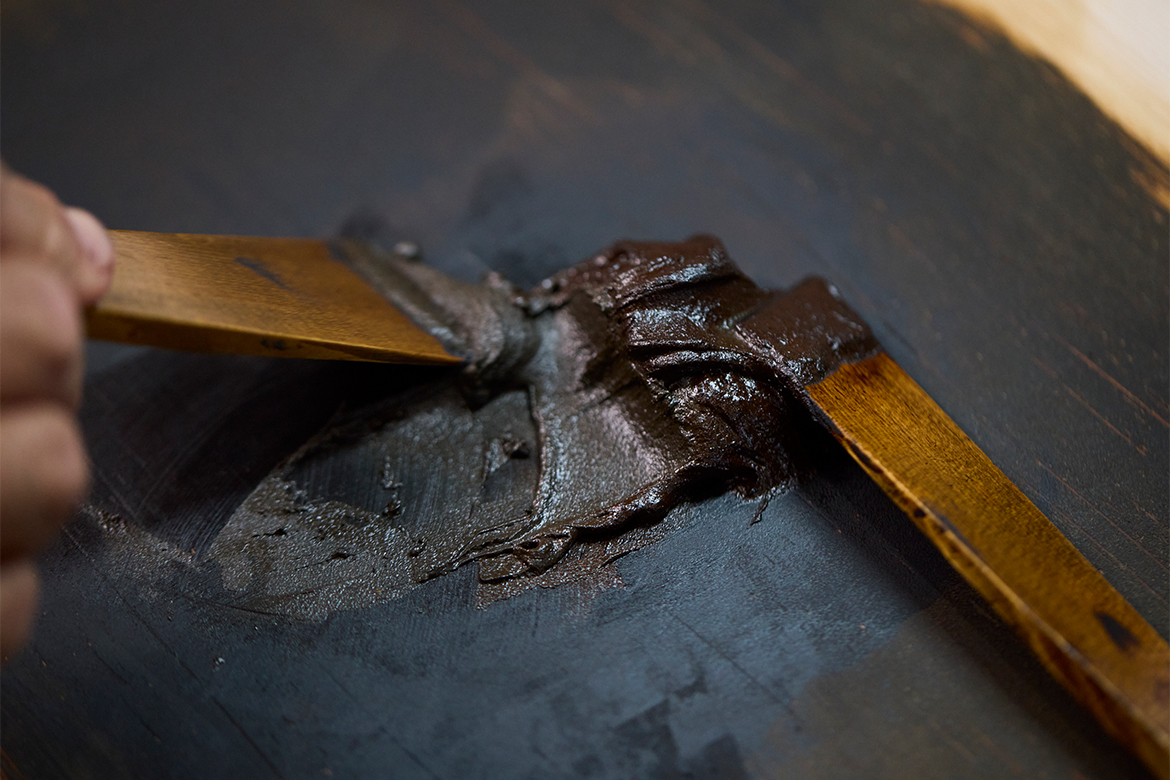
There are three reasons why Wajima lacquerware is said to be for life.
Jinoko (Earth Powder)
Lacquer and diatomaceous earth create a base as strong as stone.
Nunogise (Cloth Covering)
The cloth reinforces the wood, making it more resistant to impacts and cracks.
124 Distinct Processes
Excellent technique through 124 processes lead to greater strength.
Jinoko (Earth Powder)
The Base of Strength
Jinoko (Earth Powder)
The Base of Strength
When talking about the durability of Wajima lacquerware, an essential ingredient is jinoko.
Jinoko is a fine powder made from diatomaceous earth found around Wajima,
that when mixed with lacquer creates a base as strong as stone.
When the jinoko and lacquer harden, the wood becomes astonishingly strong,
resistant to impacts, cracks, and deformations.
In other words, the reason it is said Wajima lacquerware can be used for 100 years
is because of the unique base coating created with this local powder.
This process of hardening the base using jinoko is a special technique unique to Wajima lacquerware.
Nunogise (Cloth Covering)
Natural Reinforcing Fibers
Nunogise (Cloth Covering)
Natural Reinforcing Fibers
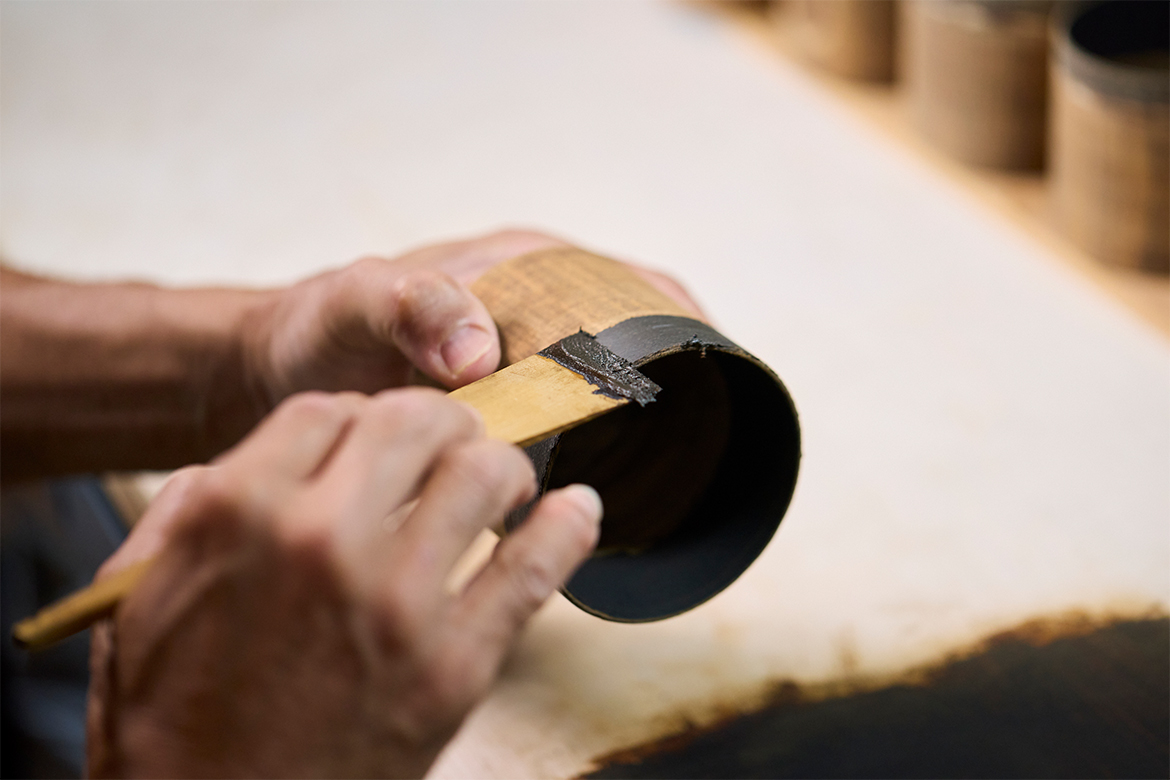
One of the techniques that supports the incredible strength of Wajima lacquerware is a process called "nunogise."
In this process, linen cloth is applied to the wooden base of the vessel,
and then lacquer and jinoko are layered on top of it.
While wood is prone to cracking and chipping at the edges and bottoms over time, in Wajima lacquerware,
cloth is tightly adhered to the wooden base, strengthening the weaker edges and bottoms.
This results in high durability, preventing cracks, chips, breaks, and shape distortion even after years of use.
Additionally, nunogise requires delicate techniques that demands the craftsman to carefully assess every detail,
such as the viscosity of the lacquer, the absorption of the wood, and the fineness of the weave of the cloth.
While nunogise is a process that cannot be seen in the final product,
this invisible work of the craftsman is what earns Wajima lacquerware the reputation
of being a lifetime piece that can be used for generations.
124 Distinct Processes
Durability and Elegance Achieved by Six Types of Craftsmen
124 Distinct Processes
Durability and Elegance Achieved by Six Types of Craftsmen
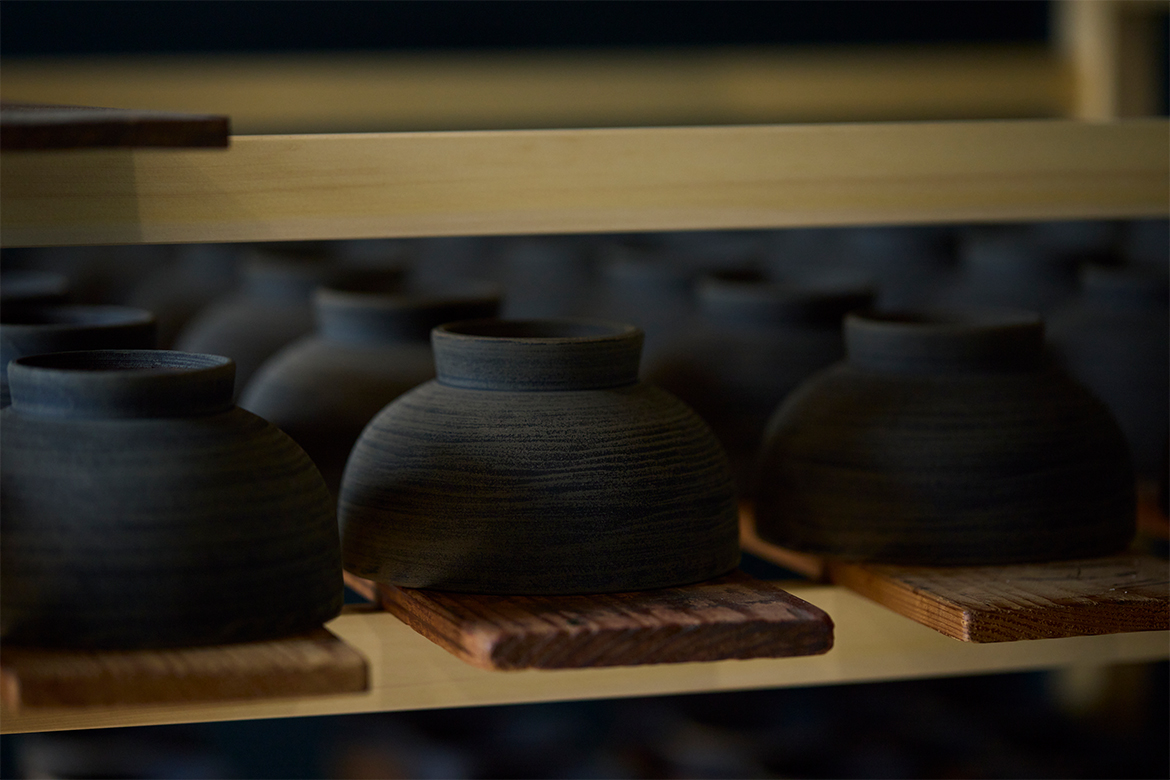
A single piece of Wajima lacquerware requires a total of 124 processes and six specialized craftsmen: woodworkers,
primers, lacquerers, maki-e artists, chinkin artists, and polishers.
From creating the wood base to priming, lacquering, and decorating, everything is an accumulation of highly advanced techniques.
The skills and time of many craftsmen are poured into each piece,
resulting in a one-of-a-kind lacquerware whose beauty deepens the more it is used.
MIKI HOUSE Meets
Wajima-Nuri Lacquerware
The Secret Behind Wajima-Nuri's Durability
Festival Dolls
Standing Hina Dolls and Kabuto Helmet
MIKI HOUSE Standing Hina Dolls
Okuizome Meal Set / Feeding Set
